第一列
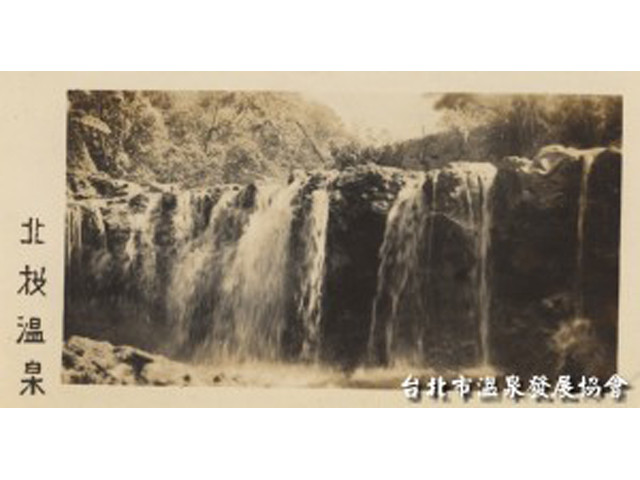
Written by: Hsu Yang-Ming. Photos and text: Hirata Tsuneyuki
(This article was made possible by the generous provision of precious historical photographs and materials by Mr. Hirata Tsuneyuki, for which we express our sincere gratitude.)
Hirata Gengo, the pioneer who developed Beitou Hot Springs, was born in 1845 (Koka 2) in Japan. His family registry was in Kita-Momodani-cho 138, Minami-ku, Osaka. He was born in Buzen Nakatsu, in the Okudaira domain. His father's name was Yanagihara Denbei. He took the surname Hirata because he was adopted by Hirata Uemon from his mother's side of the family, inheriting the Hirata household. At the age of twenty-one, in the first year of Keio (1865), during the final years of the Tokugawa Shogunate and just before the Meiji Restoration (Emperor Meiji ascended the throne in 1867), Japan was in a period of upheaval. It was during this transitional period that Hirata Gengo moved to Osaka, believing it was a fascinating time. He felt that he was not suited to remain in a boring border region, but should seize this "once-in-a-lifetime opportunity" to do great things for the people.
With such ambitions, Hirata Gengo associated with like-minded young activists. On December 31, 1866 (Keio 2), together with Hirano Shiro, Iwami Tadayoshi, Sata Naiki, and 258 others, he set fire to the shogunate's outpost in Yotsukamachi, Usa District, seizing two cannons and the outpost's rice supplies, and occupied Mount Omoto at Usa Hachiman Shrine. They carried out this plan to attack Kyushu under the banner of expelling foreigners.
However, Hirata admitted it was truly a reckless act. The following month, on January 15, 1867, over a thousand people arrived from Choshu at Usa, claiming to be their allies. Hirata and his companions never suspected they were actually enemies. Hirano and Sata, who went as emissaries to greet them, were killed instead. Having believed them to be allies and not expecting an enemy attack, their defenses were weak and they were defeated. Everyone scattered and fled. During the battle, a bullet grazed Hirata's right kneecap, leaving a scar that remained even when he arrived in Taiwan.
After fleeing, Hirata temporarily hid at a relative's home in Tateishi domain. When things calmed down, he disguised himself as a ronin and set out on a warrior's training journey. Hirata described himself carrying a famous sword three shaku two sun and five bu long, wearing an Ogura kimono, with kendo protective gear and a bamboo sword on his shoulder, setting out from his hometown. Being young with no travel experience and knowing no one anywhere, he felt quite lonely. He said the famous sword his father gave him was his only means of protection and the only thing he could rely on, and he always carried it carefully. He brought it to Taiwan as well, but later sold it to the renowned businessman Kume Taminosuke for fifty yen.
After traveling throughout the provinces, Hirata finally reached Edo (Tokyo). Deciding it was time to study swordsmanship, he became a student of Momoi Shunzo, the martial arts instructor for the Shogun's retainers. In 1868 (Meiji 1), when Momoi moved south to Osaka and opened a dojo in Karabori (then Momodani), Hirata followed. In Meiji 3, when Osaka Prefecture began establishing a police force, young men who had been involved in catching criminals were recruited as constables. Eleven of Momoi's students were selected as police officers, and Hirata was among them. Later, in Meiji 6, when negotiations on the Korean Expedition proposal collapsed, Saigo, Itagaki, Eto, and other high-ranking councilors resigned en masse. In Meiji 7, twenty-eight senior Osaka police officers also resigned, including Hirata. The Osaka police force was on the verge of collapse, but was saved by the efforts of Tosa-born Kusumoto and Governor Watanabe Noboru.
After these events, from Meiji 18, Hirata worked in mining for the Sumitomo family in Osaka, then was dispatched to the Sakurasato copper mine in Choshu. Dr. Abe Heikuma, who later became a famous physician in Taipei, was also living at Sakurasato mine at the time, though Hirata did not know him personally. In June 1895 (Meiji 28), the year Taiwan was ceded to Japan, Hirata recognized Taiwan as a great opportunity for development. This adventurer resigned from Sumitomo and immediately crossed the sea to Taiwan. He wrote: "With several years of practical experience in mining at Sumitomo, and harboring the dream and ambition of striking it rich and becoming one of the world's greatest tycoons, I came to Taiwan to mine for gold."
After landing at Keelung, Hirata rushed to the mountains of Ruifang, where the Fujita and Tanaka mining operations were located. After investigation, he confirmed that the area was indeed as mineral-rich as he had imagined, and immediately submitted a petition to the Keelung Military Government for approximately 500,000 tsubo of exploratory mining rights. However, the government refused his petition, claiming the gold mountain was imperial property. Soon after, wounds he sustained during his mine survey became infected, and beriberi struck. Keelung had no doctors at all. Hirata wrote: "My inner anguish can only be imagined."
Then he heard a rumor that there were hot springs in the mountains near Taipei. Though skeptical, he thought it might be true and decided to go see for himself. He traveled south along the Keelung River to Taipei. After staying at a place called the Tatsuma Trading Post and conducting research, he confirmed that there were indeed hot springs at the foot of Datun Mountain. On November 25, 1895 (Meiji 28, the first year of Japanese rule), Hirata visited Beitou for the first time, staying with a local surnamed Chen. After bathing and recuperating in the hot spring streams, his condition gradually improved, and by late December he was nearly recovered, so he returned to Taipei for the New Year. However, on January 1, 1896 (Meiji 29), Chen Qiuju and others attacked Taipei City. The Datun Mountain range was essentially the stronghold of Jian Dashi, so the military government period was quite dangerous and chaotic. Since Japan had only recently arrived in Taiwan, Hirata believed he was probably the first Japanese civilian to visit Beitou Hot Springs for therapeutic bathing.
Hirata returned to Taipei and continued staying at the Tatsuma Trading Post. He reflected: "Fate is truly a mysterious thing." Despite being warned of danger, he returned to Beitou to bathe in March of Meiji 29. At this point, he made up his mind, purchased a house by Beitou Creek from a local resident, and opened a temporary hot spring inn. This was Tengoku-an, located at "Lot 73, Beitou Village, Zhilan Second Fort" during the Japanese period - today's "No. 234, Guangming Road, Beitou District, Taipei." Tengoku-an was the first hot spring inn in Beitou and the first in all of Taiwan. Hirata later reflected: "Sometimes I wonder: was this fortune or misfortune for me? Looking back now, whether becoming the world's greatest tycoon or the proprietor of a small hot spring inn called Tengoku-an, there seems to be no real difference. So I don't feel a strong sense of loss. What matters most is being safe and sound. There's no need to dwell on the past. As long as one is free, doing one's best at what one can do is enough. I should feel content with my current circumstances."
From August 1896 (Meiji 29), Matsumoto Kametaro, the financial officer of the Taipei Military Government, began constructing Shotouen, the second hot spring inn in Beitou. Kimura Matazo, an officer who resigned from the financial division, came to stay at Tengoku-an to oversee the Shotouen construction. Later, Hoyoen and Beitou-kan were also built. Hirata observed these developments and deeply felt how much things had changed over the past decade. This is the story of how Beitou Hot Springs began - events that took place 104 years ago.
After nearly a century of change, the Hirata family returned to Japan from Beitou after World War II. Hirata Gengo's eldest grandson, Hirata Matsugiku, graduated from Meiji University. He was conscripted to Manchuria during World War II and passed away about ten years ago. His second grandson, Hirata Tsuneyuki, graduated from Taipei Commercial School and later settled in Kyushu, Japan, running a construction business. He is now over seventy years old. His granddaughter, Hirata Yumeno, now 86 years old, married and took her husband's surname, now known as "Lin Yumeno," and resides in Kumamoto City, Japan.
When we began researching Beitou's history, historian Lin Hengdao stated that the former first hot spring inn "Tengoku-an" had been renamed to today's "Long Nice Hot Spring." This claim was published in the "Beitou Society" magazine. Shortly after publication, we discovered in Japanese-era maps of Beitou that "Tengoku-an" and "Long Nice" (Takinoyu) were two different establishments. The map showed that Tengoku-an was located behind today's Xinnian Villa, at today's No. 234 Guangming Road. Soon after, Mr. Chen, an elderly neighbor of the former "Tengoku-an" who operated the "Qishui Garden," read the article and contacted the author with corrections, introducing his former "Beitou Elementary School" classmate, Mr. Hirata Tsuneyuki. After correspondence, Mr. Hirata sent several photographs and materials about Tengoku-an. This confirmed that Tengoku-an and Long Nice Hot Spring (Takinoyu) were two separate establishments that existed simultaneously, not the same place. The mystery of Tengoku-an's location was finally resolved. However, many journalists had already reported, based on Lin Hengdao's statement, that Long Nice was the renamed Tengoku-an, leading to widespread misinformation.
After comparing photographs and maps, we confirmed that the stone steps and pillars in front of today's No. 234 Guangming Road are the surviving remnants of Tengoku-an. In September 1997, the "Hsu Yang-Ming Office" petitioned the Taipei City Government for historic site designation. On October 23, 1997, the Civil Affairs Bureau invited scholars for an on-site inspection, and the Historic Sites Review Committee approved the designation on November 27, 1997. However, since the "Tengoku-an Site" actually consisted only of an entrance stairway and two stone gate pillars, the use of the term "site" was confused with the archaeological definition. To avoid controversy, the review committee suggested to the author that instead of historic site designation, a commemorative monument be erected. After negotiation, the author agreed, and the petition was changed from historic site designation to monument erection.
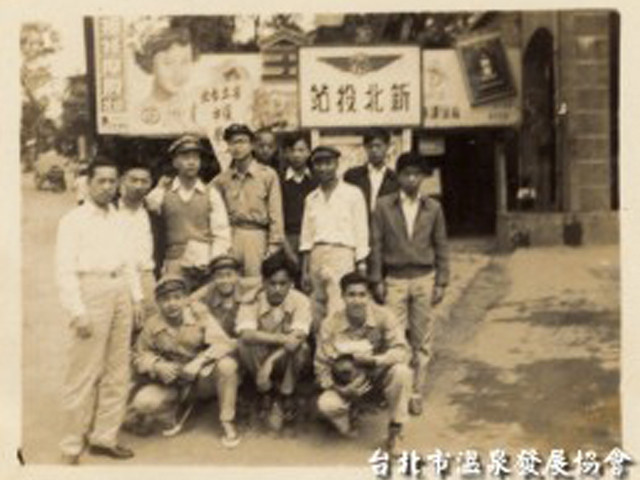
Subsequently, the "Hsu Yang-Ming Office" petitioned the Taipei City Urban Development Bureau to establish the "Tengoku-an Memorial Park," requesting that the Tengoku-an site be rezoned to create a park as part of the "Beitou Hot Spring Waterfront Park." The Bureau agreed, and in the "Beitou Hot Spring Waterfront Park Special District" detailed plan, the public facilities section stated: "The south side of Guangming Road and the entrance of Lane 73, Wenquan Road is the original site of Beitou's first hot spring inn 'Tengoku-an,' which holds great significance in local history and culture. It is proposed to be developed as a park with a commemorative monument to enhance the attractions of the Hot Spring Waterfront Park, with an area of approximately 0.08 hectares." This proposal was approved by the Taipei City Urban Planning Commission on December 18, 1998, and was also approved by the Ministry of the Interior in late June of the following year. Thus, the birthplace of Beitou's hot spring development can finally be preserved as a memorial park. Two years of effort have finally borne fruit, which is truly gratifying.